
Why Nuclear Energy in the U.S.?
Nuclear energy is the largest source of carbon-free electricity in the United States and provides around one-fifth of the nation’s power. Unlike intermittent renewables, it delivers dependable, large-scale energy around the clock while avoiding the harmful emissions linked to fossil fuels. Its efficiency is unmatched: a fuel pellet about the size of a gummy bear generates as much energy as a ton of coal. With 94 reactors powering 75 million homes, nuclear has already proven its value as a cornerstone of the energy mix.
Equally important, nuclear strengthens America’s energy security. The U.S. is the world’s biggest consumer of uranium yet produces little of its own supply, leaving it vulnerable to foreign state-owned producers. Expanding domestic uranium production reduces reliance on geopolitical rivals and ensures a resilient fuel cycle. Supporting American uranium also creates jobs, generates tax revenue, and underpins an affordable, reliable, and sustainable energy future.
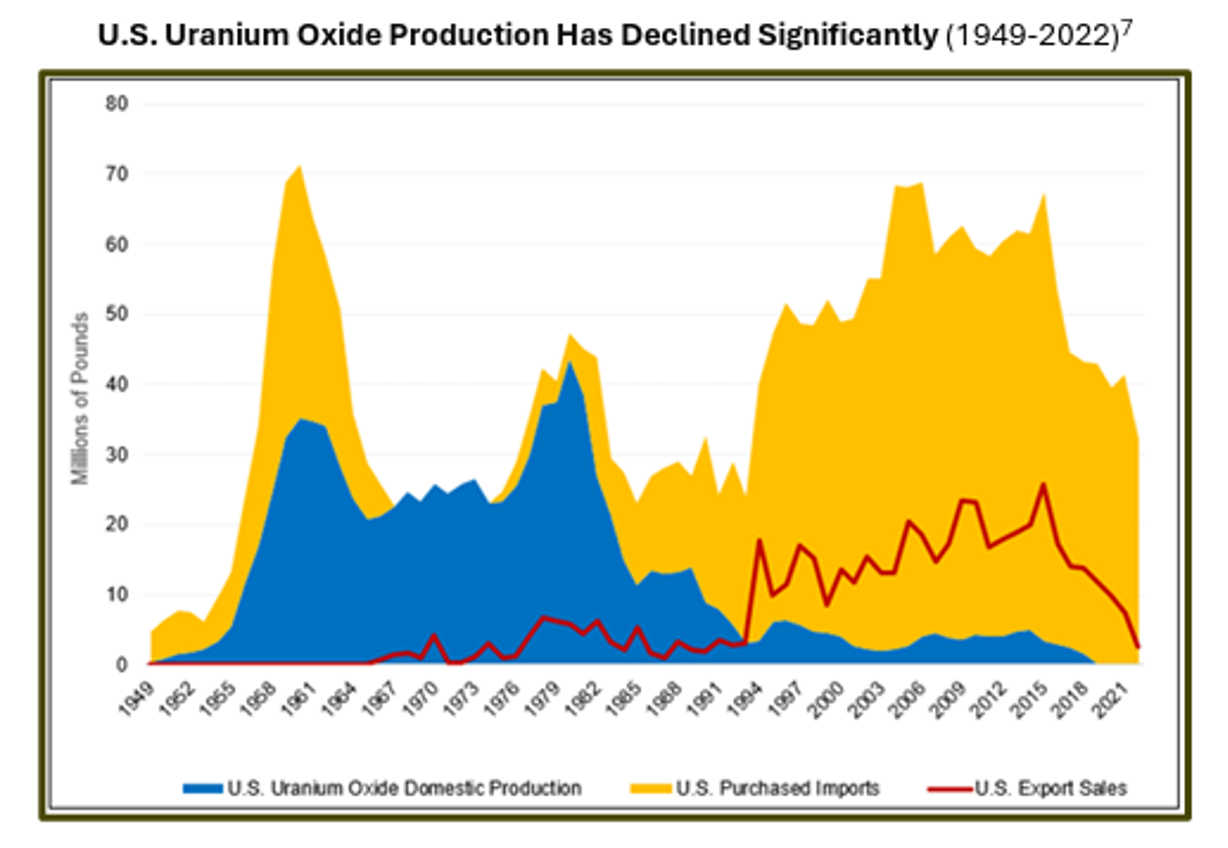
Momentum for nuclear has never been stronger. Utilities are extending the lives of existing plants, pursuing power uprates, and securing long-term fuel supply contracts. Meanwhile, Congress and the Department of Energy are investing billions to expand enrichment, conversion, and next-generation reactor technology. With bipartisan support and growing recognition that nuclear is essential for achieving net-zero goals, the U.S. is positioned to reaffirm its role as a global leader in clean energy.
About Uranium
In March 2025, President Trump issued Executive Order 14156 formally designating uranium as a U.S. critical mineral. This legal shift empowers federal agencies under the Defense Production Act to fast-track permitting, direct federal procurement, and prioritize uranium mining, conversion, enrichment, and fuel fabrication infrastructure across the country. A follow-on executive package on May 23 accelerated regulatory reform across the nuclear fuel cycle—including licensing of advanced reactors (Gen III/IV), small modular reactors (SMRs), microreactors, and establishing a goal of 400 GW of nuclear capacity by 2050—creating a supportive policy ecosystem for domestic uranium producers and enabling secure HALEU supply chains for next-generation reactors.
Meanwhile, the uranium market is facing a historic supply–demand imbalance. Years of under-investment and tightened geopolitical trade have compressed inventories and elevated prices. Spot uranium prices recovered from lows near US $63/lb in early 2025 to over $78.50/lb by June, while long-term contracts and forward ceilings continue rising as utilities secure supply. At the same time, nuclear energy is increasingly viewed as a reliable, carbonfree backbone for both energy security and climate goals, with Western governments doubling down on nuclear deployment and investing in domestic fuel chains, SMRs, and advanced reactor technologies. These tailwinds explain why the Company feels strategically positioned in uranium, eager to help to supply a market poised for structural growth and supported by strong public policy frameworks.